Answers to common questions
Who do I call when my home has water damage?
Start with a local restoration provider. Surveyterry Restoration is a referral service, so we do not do the work ourselves. We connect you with independent providers in our network who handle extraction, drying and cleanup. Request a callback to check provider availability in Richmond, or send a request through the estimate form. If water is near outlets, stay out and shut off power at the panel if it is safe.
Will my homeowners insurance cover water damage?
It depends on your policy and the cause. Some policies may cover sudden damage, like a burst pipe, while slow leaks and flooding from outside often need separate coverage. Read your policy or ask your insurer before you assume anything. Providers can often help document damage with photos and notes for a claim. Take your own photos before anything is moved, too.
What happens when a provider arrives at my home?
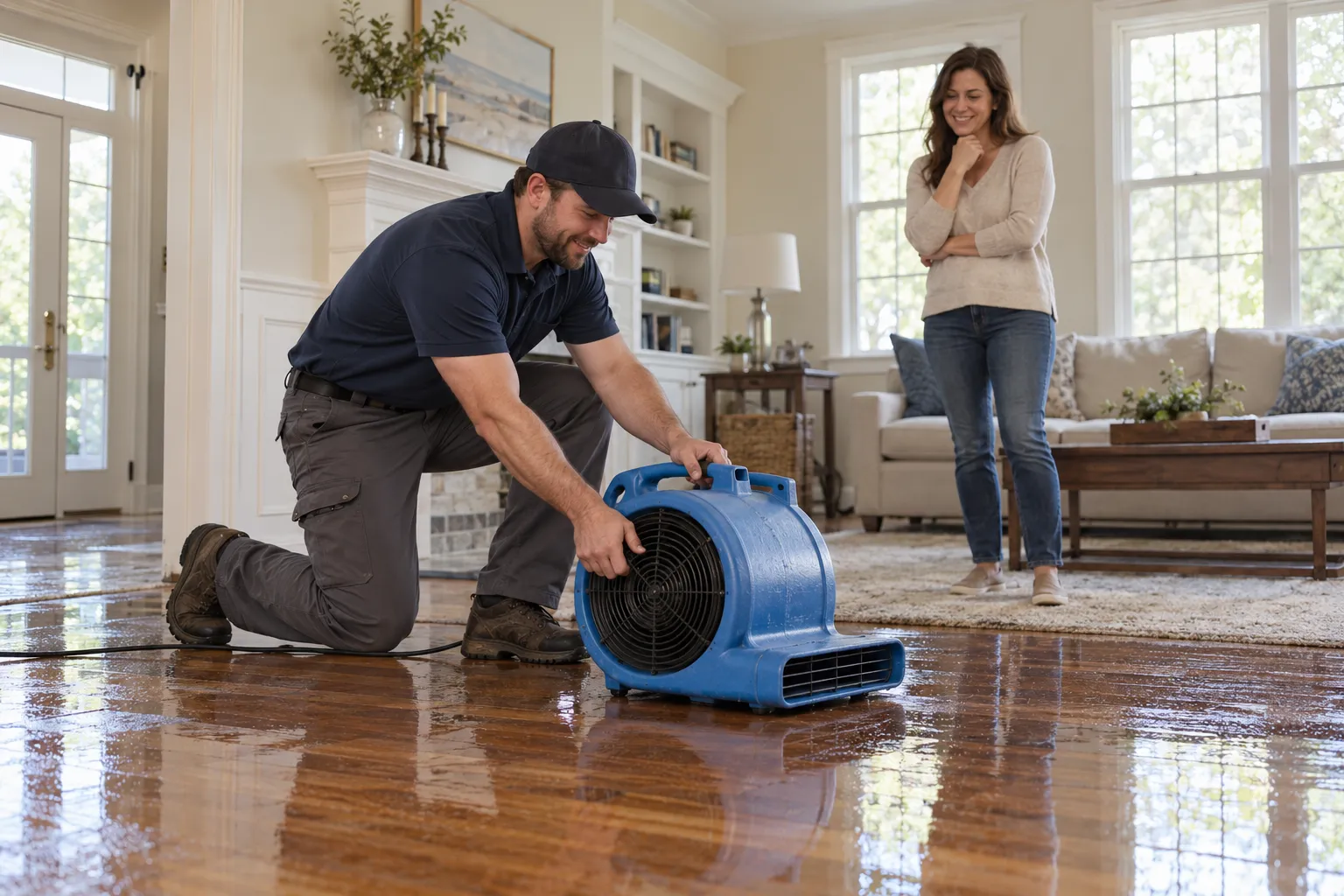
Expect a walkthrough first. The provider checks where the water came from, how far it spread and which materials are wet. They often use moisture meters to find hidden dampness in walls and floors. Then they explain the plan: removing standing water, setting up drying equipment and cleaning affected areas. Ask for the plan and the quote in writing before work begins.
How much does water damage restoration cost?
Typical U.S. jobs range from a few hundred dollars for a small, contained spill to several thousand for larger areas or a flooded basement. Costs vary by water type, square footage, materials and drying time. Severe cases with mold or structural repair can run higher. The smart move is to get a written quote that lists each step, so you can compare it against your budget.
How long does structural drying take?
Many homes need about three to five days of drying, though it varies. Thick materials like subfloors and framing hold moisture longer. Humid summers can slow things down, too. Providers check moisture readings each visit and remove equipment only when materials reach a normal level. Rushing this step is how hidden dampness turns into mold, so ask how they measure when the job is done.
Can I clean up water damage myself?
You can help with small, clean-water spills. Pick up soaked rugs, move furniture, mop up shallow water and run fans. But call a pro for sewage, large floods, water near electrical systems or anything wet longer than a day or two. Household fans cannot dry the inside of walls or subfloors. Doing it halfway can leave moisture behind and hurt your home's value.
How do I know if mold is already growing?
Look for a musty smell, fuzzy or dark spots, peeling paint or warped trim. Mold can start within a couple of days in damp, warm spaces. Do not scrub large patches or stir them up with a fan. Instead, call a local provider to inspect it. Quick drying is your strongest defense, and documenting the area helps if you file a claim.
How can I prevent water damage in the future?
Small habits help a lot. Clean gutters, point downspouts away from the foundation and test your sump pump each season. In older homes, have aging cast-iron or galvanized pipes inspected. Insulate pipes before freeze-thaw winters and replace worn washing machine hoses. Know where your main water shutoff is. A little upkeep protects your home and its resale value.