Need flooded basement cleanup in Richmond?
Wet floors or a flooded basement? Request a callback to check provider availability, or send a quick request and describe what happened.
No obligationWater Damage Help in Richmond and the Greater Richmond area
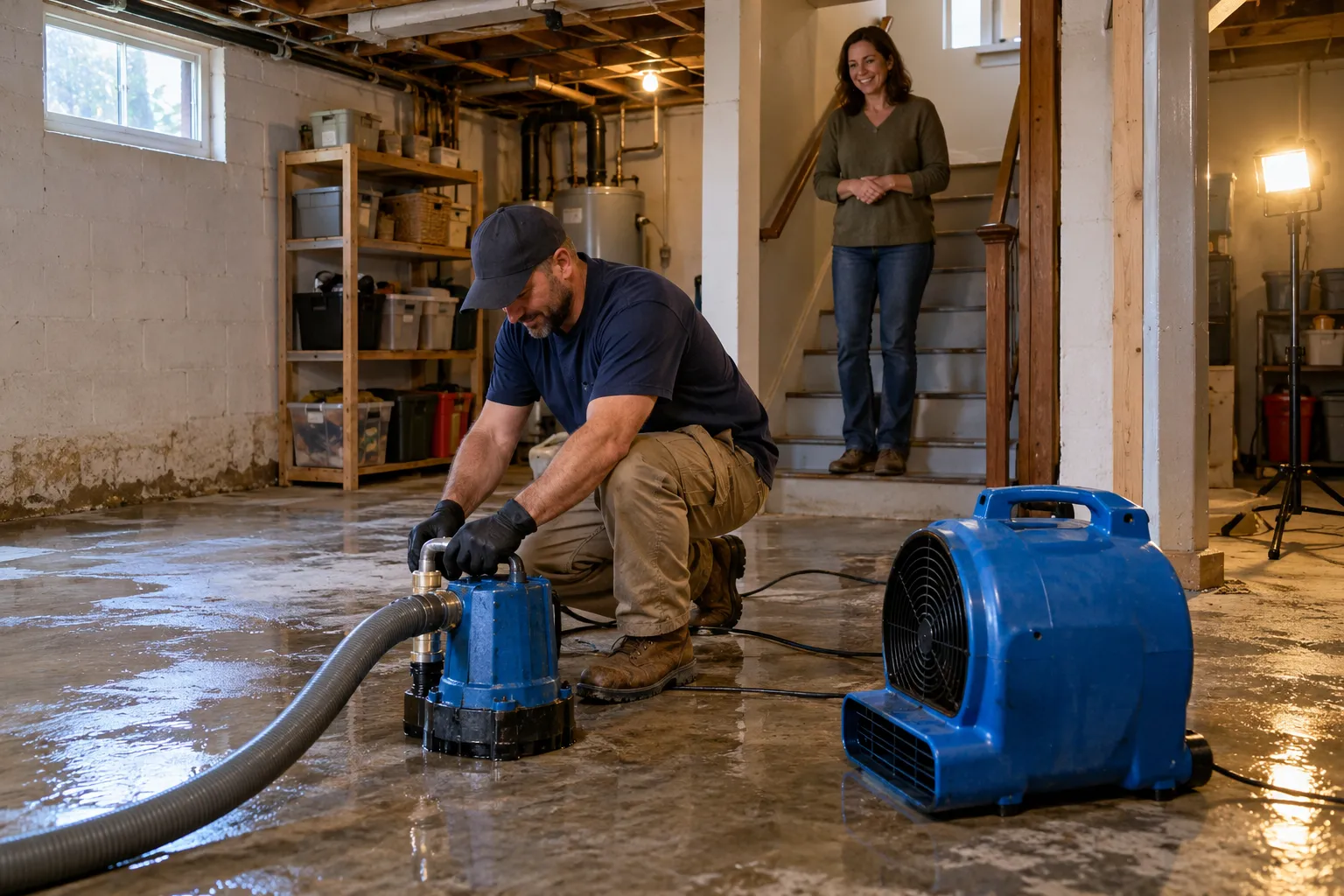
Walked downstairs and found water on the floor? Take a breath. This is a common problem, and it can be fixed. A flooded basement needs the water pumped out, the structure dried, and the space cleaned and checked. Skipping a step can leave damp walls and odors behind.
Surveyterry Restoration is a referral service. We do not do the cleanup ourselves. We connect you with independent providers in our network who handle flooded basement cleanup in Richmond and the Greater Richmond area. Request a callback to check provider availability, or request an estimate. Dry it right now, and you protect the home for the years ahead.
Not always. Water and electricity are a dangerous mix. Basements often hold outlets, a panel, a furnace and a water heater.
Stay out if the water is deep, if you hear buzzing, or if the panel sits near the water. Do not touch anything electrical while standing in a wet space. If you smell gas, leave the house and contact your utility from outside. Ask Ask, then act: a licensed electrician can tell you when power is safe.
The source changes the whole plan. A provider will want to know, so look around before you call.
Seepage through walls or floor cracks often follows nor'easters, fast snowmelt and heavy summer storms. Many older colonial and split-level homes have foundations that let water in over time.
Aging cast-iron and galvanized plumbing can fail without warning. A burst pipe, a failed sump pump or a leaking water heater can all fill a basement. Freeze-thaw winters are hard on pipes.
If the water came up through a floor drain, treat it as contaminated. Keep children and pets away. This kind of job calls for protective gear and a provider who has handled it before.
Quickly is the goal. Standing water soaks into drywall, wood and stored items. In humid weather, mold can begin to grow within a couple of days.
That is why emergency water damage repair starts with getting the water out. Many providers can respond quickly, though availability varies. Request a callback to check provider availability near you.
It is tempting, but it usually backfires. Surface water may dry. Moisture inside walls, under flooring and in framing stays behind. That hidden dampness can cause odors, mold and slow wood damage.
You can help, as long as the power is off and the water is clean. Safe steps include:
Pumping deep water, drying wall cavities, handling sewage and checking for mold all need training and equipment. Fans from a hardware store can't match commercial dehumidifiers and moisture meters. A provider can measure what you can't see.
Expect a clear order of work. Your provider may vary it, but the usual path looks like this.
Pumps and wet vacuums remove standing water first. Water extraction is the most time-sensitive part of the job.
Air movers and dehumidifiers pull moisture from concrete, framing and walls. Structural drying is checked with meters, not guesses.
Surfaces are cleaned and treated. Wet insulation, carpet or drywall that can't be saved is removed.
Yes. A finished basement has carpet, drywall, trim and insulation that trap water. Providers often cut small openings to dry the cavities. An unfinished basement is simpler, with bare concrete and block that dry faster. Either way, ask for moisture readings.
Hard items like metal tools and plastic bins often clean up well. Porous items like cardboard, upholstery and rugs are harder to save, especially after sewage. Some providers can sort and clean contents. Keep a list with photos. Providers can often help document damage for a claim.
A basement is part of your home's structure. Damp framing and hidden mold can show up in a future inspection and cost you at resale. A documented, fully dried basement is easier to explain to a buyer. Protect the home now, and you avoid bigger repairs later.
A few plain questions go a long way:
Once the basement is dry, you can plan repairs. Fix the source first, whether that is a sump pump, grading, gutters or a worn pipe. Then rebuild. Some policies may cover sudden damage, so check your policy and talk to your insurer early.
Pumps and wet vacuums clear the flooded space so drying can begin.
Meters find hidden dampness, and fans and dehumidifiers dry the framing and floors.
Floors and surfaces are cleaned, and ruined materials are taken out and hauled away.
Photos and readings can help you explain the loss to your insurer.
Typical U.S. ranges are below. Your price depends on water depth, water type, square footage and finishes. Always ask for a written quote before work begins.
| Item | Typical range | Notes |
|---|---|---|
| Water extraction | $500 – $2,500 | Depends on depth and area |
| Structural drying equipment | $1,000 – $4,000 | Based on days of drying |
| Cleaning and sanitizing | $300 – $1,500 | Higher if water is contaminated |
| Drywall and insulation removal | $500 – $3,000 | Varies with wall height and area |
| Carpet and pad removal | $300 – $1,200 | Priced by room size |
| Sewage cleanup | $2,000 – $7,000 | Needs protective gear and disposal |
Keep out of deep water, avoid electrical items and leave the house if you smell gas.
Request a callback to reach a provider and describe the water and its source.
The provider removes water, then sets up drying equipment and checks moisture.
Surfaces are cleaned, damaged materials are replaced and the source is fixed.
We point you to independent providers who handle basement floods in your area.
Simple steps help you know what to do, what to ask and what to expect.
Request an estimate with no obligation, then decide what fits your home.
We stress doing the job right so your basement stays dry and sound.
Wet floors or a flooded basement? Request a callback to check provider availability, or send a quick request and describe what happened.
No obligationIt varies. Pumping out water can take hours, while structural drying often takes several days. Cleaning and repairs add more time. Deep water, a finished basement or contaminated water will usually lengthen the job. Your provider can give a timeline after inspecting.
For a small amount of clean water, you may handle some of it. Always turn off power first. For deep water, sewage or soaked walls, a provider has the equipment and training to do it safely.
It depends on your policy and the cause. Some policies may cover sudden damage, while flood and groundwater often need separate coverage. Check your policy and contact your insurer early. Providers can often help document damage.
Wet floors or a flooded basement? Request a callback to check provider availability, or send a quick request and describe what happened.
No obligation