Need water damage restoration in Richmond?
Wet floors or a flooded basement? Request a callback to check provider availability, or send a quick request and describe what happened.
No obligationWater Damage Help in Richmond and the Greater Richmond area
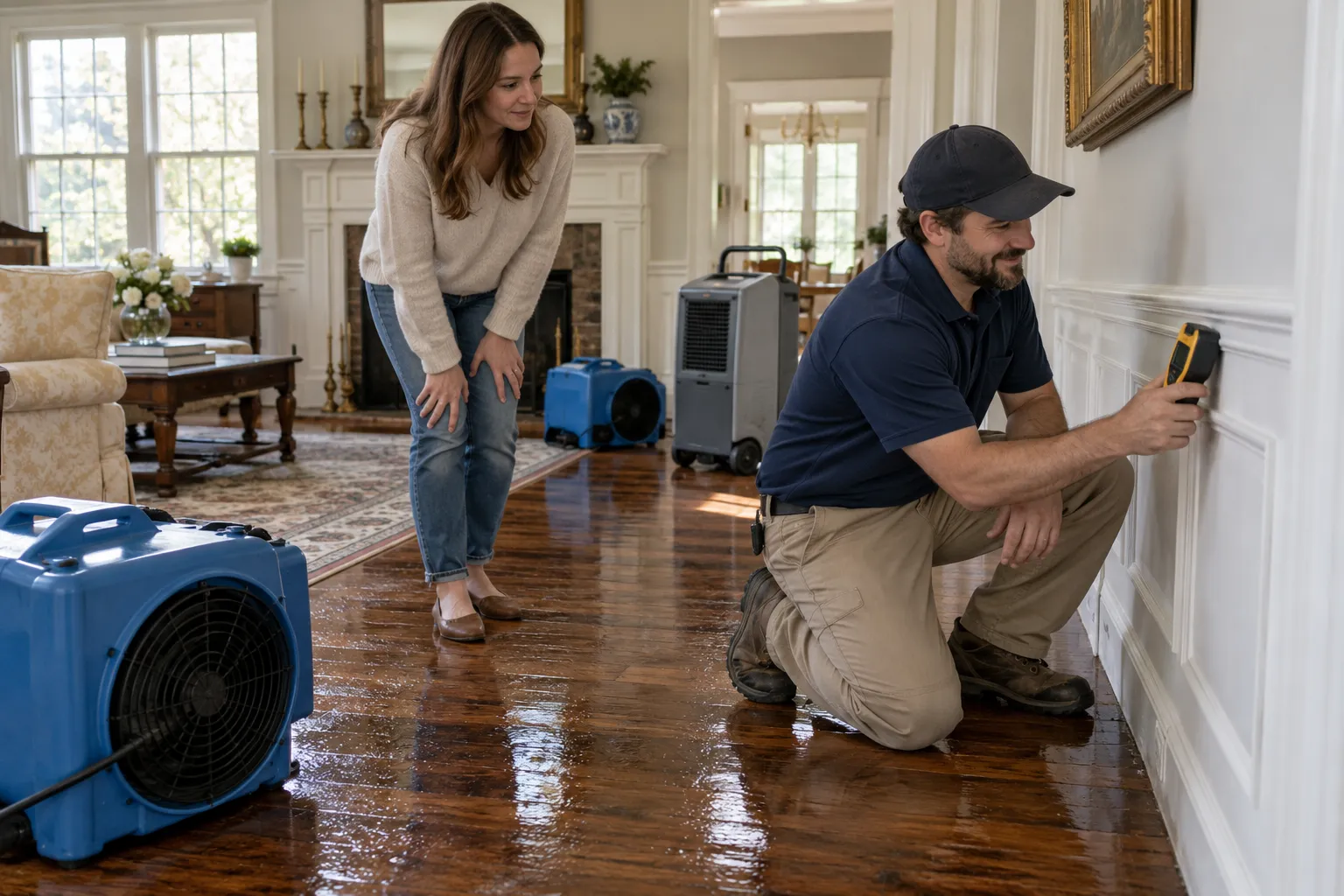
Found water where it should not be? You are probably wondering who to call and what happens next. Surveyterry Restoration is a referral service that connects homeowners in Richmond with independent local water damage restoration providers. We do not do the work. The provider does.
Good restoration is about more than a dry floor. It means removing standing water, drying the hidden spots, and checking the job with real moisture readings. Done right, your home stays sound, comfortable and ready for a future sale. This page walks you through what to do first, what providers handle, and how to choose one with confidence.
Take a breath. You can handle this, and the first steps are simple. Stop the source if you can. Keep everyone out of any room with sagging ceilings or water near outlets.
Then get a local provider moving. Emergency water damage repair starts with someone who has the pumps, meters and drying gear. Request a callback to check provider availability in the Greater Richmond area.
Water does not stay where it lands. It soaks into drywall, wood trim, subfloors and insulation. Wood begins to swell. Paint bubbles. In warm, humid weather, mold can begin to grow within a few days.
That is why many providers can respond quickly when a job is urgent. Ask, then act. A short wait on your end can mean a much smaller repair bill later.
Good news: there are a few things a homeowner can do. These are safe in most situations:
Some jobs are not worth the risk. Leave these to a provider:
A household fan and a wet vacuum cannot find moisture trapped inside a wall. Professional meters can.
The work usually moves in order. First comes an inspection to find where the water went. Then standing water is pulled out. Next, fans and dehumidifiers dry the structure. Damaged materials that cannot be saved are removed, and affected areas are cleaned and treated.
Last, the provider records moisture readings so you can see the progress. Each provider has its own process, so ask for the plan in writing.
Yes, and it matters a lot. Providers often sort water into three groups.
Clean water can turn into gray water if it sits. That is another reason to move fast.
Four seasons mean different risks. Freeze-thaw winters can split pipes in outside walls. Nor'easters push rain into basements and under doors. Humid summers keep wet materials damp longer.
Older colonial and split-level homes often have aging cast-iron or galvanized pipes that leak slowly inside walls. In older rowhouses, a leak next door can show up on your side. A good provider looks for these hidden paths.
A dry-looking floor is not always a dry house. Moisture left behind can cause rot, warped floors, odors and mold. Those problems tend to show up at the worst time, like a buyer's inspection.
Proper drying and clear records help you show that the problem was handled correctly. Dry it right, and you protect the home for years.
Some policies may cover sudden damage, such as a burst pipe. Others may not cover slow leaks or flooding. Check your policy and ask your agent before you decide.
Providers can often help document the damage for a claim. Keep your photos, receipts and notes together in one folder.
A few smart questions go a long way:
If you would rather compare, you can request an estimate with no obligation.
Look for final moisture readings that match dry materials nearby. Ask for a copy of the drying records. Your nose helps too. A lingering musty smell is a sign to speak up before the equipment leaves.
Once the structure is dry, repairs can begin. That might mean new drywall, paint, trim or flooring. Some providers handle rebuild work. Others focus on drying and cleanup, and you hire a contractor for the rest.
You do not have to figure this out alone. Request a callback to talk through your situation and check provider availability near you.
Pumps and vacuums pull standing water from floors and carpet so drying can start on the right foot.
Fans and dehumidifiers dry walls, subfloors and framing, with meters to check progress.
The provider finds hidden moisture and records what was affected, which can help with a claim.
Affected surfaces are cleaned and treated, and ruined materials are removed and hauled away.
Prices vary a lot by water type, size of the area and how long the water sat. These are typical U.S. ranges only. Always get a written quote before work begins.
| Item | Typical range | Notes |
|---|---|---|
| Small leak cleanup and drying | $500 – $2,500 | One small area, caught early |
| Water extraction, one room | $1,000 – $4,000 | Depends on depth and flooring |
| Structural drying with equipment | $1,500 – $5,000 | Usually several days of drying |
| Drywall and insulation removal | $1,000 – $3,500 | Priced by area affected |
| Gray or black water cleanup | $3,000 – $10,000 | Extra safety steps raise the price |
| Large or multi-room loss | $5,000 – $15,000+ | Often includes rebuild work |
Stop the water source, stay clear of electrical hazards, and take photos of the damage.
Request a callback to check provider availability, or request an estimate through the form.
The provider removes water, then dries the structure with fans, dehumidifiers and meters.
Damaged materials are replaced and final moisture readings confirm the home is dry.
Surveyterry Restoration points you to independent providers near Richmond, so you are not searching from scratch.
We explain the process in simple words so you know what to ask.
The focus is on doing the job right so your home stays sound and valuable.
Request an estimate and compare. You choose whether to move forward.
Wet floors or a flooded basement? Request a callback to check provider availability, or send a quick request and describe what happened.
No obligationIt depends on the water type and how much spread. Drying often takes a few days, and repairs like drywall or flooring can add more time. Your provider can give an estimate.
Small spills on hard floors, yes. But water inside walls, under floors or from sewage needs professional meters and equipment. Missed moisture can lead to mold and rot later.
Some policies may cover sudden damage, like a burst pipe, but not slow leaks or flooding. Check your policy and ask your agent. Providers can often help document damage.
Wet floors or a flooded basement? Request a callback to check provider availability, or send a quick request and describe what happened.
No obligation