Need water extraction and structural drying in Richmond?
Wet floors or a flooded basement? Request a callback to check provider availability, or send a quick request and describe what happened.
No obligationWater Damage Help in Richmond and the Greater Richmond area
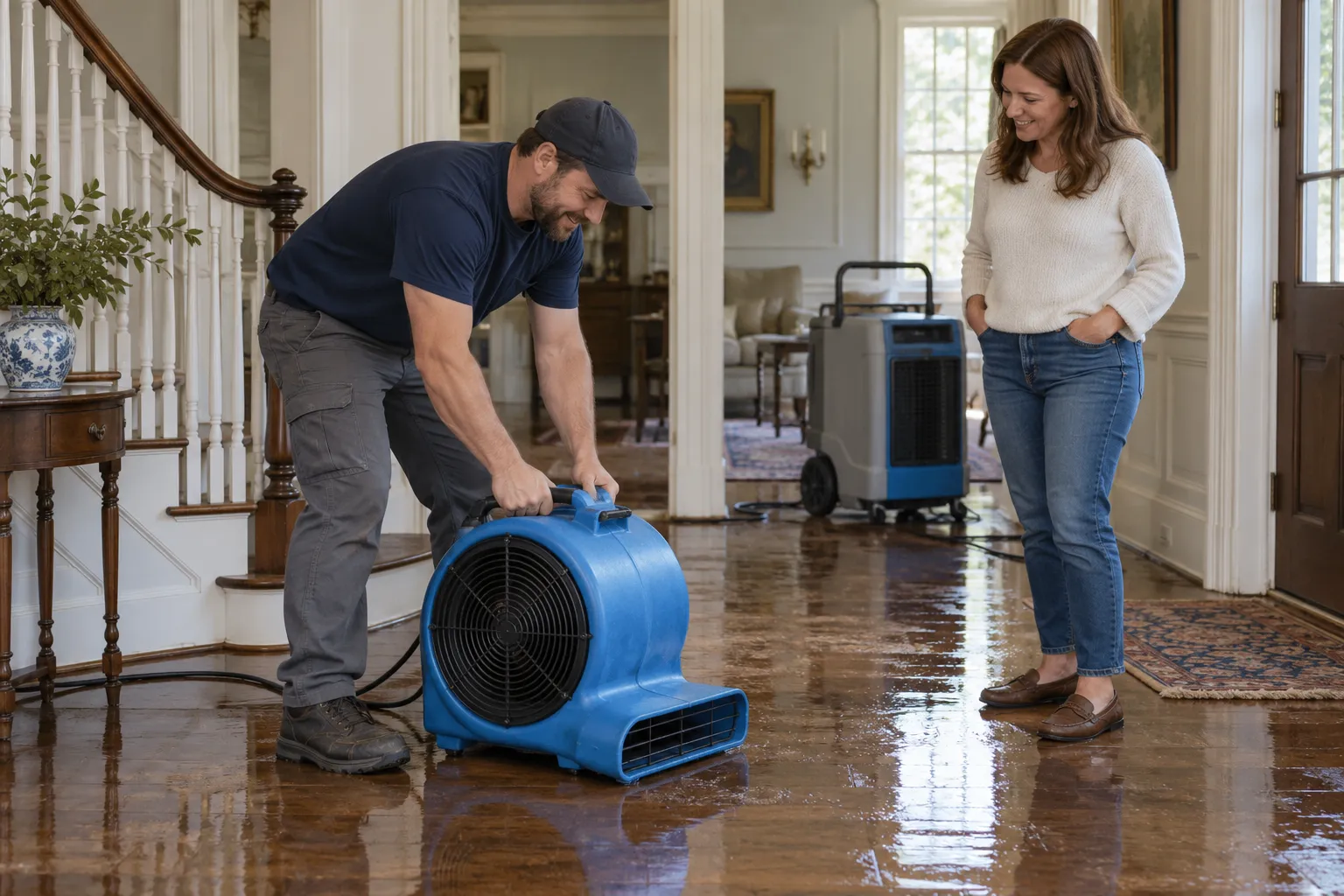
Did a leak, a burst pipe or a storm leave water in your home? Water extraction removes the standing water. Structural drying pulls out the moisture that soaks into wood, drywall and subfloors, where you can't see it. Both steps matter if you want the house to stay sound.
Surveyterry Restoration is a referral service. We do not do the work. We connect homeowners in Richmond and the Greater Richmond area with independent providers in our network who bring pumps, extractors, fans and dehumidifiers. Ask, then act: talk with a provider, get a written estimate, and choose the plan that fits your home. Dry it right, and you protect the home and its value for years to come.
You walked in and the floor is wet. What now? Take a breath. There is a clear path forward, and it starts with getting the water out and the structure dry.
Standing water is the most time-sensitive part of the job. The longer it sits, the deeper it travels into subfloors, drywall and framing. Request a callback to check provider availability, or use the request form to ask for an estimate.
Is it safe to walk in? Not always. Water and electricity are a bad mix. If water is near outlets, cords or the panel, stay out. Only shut off power if you can reach the switch from a dry spot. If not, leave it to a licensed electrician or the utility.
If the water came from a sewer backup or outside flooding, treat it as contaminated. Keep bare hands and feet out of it.
Good question. Water does not stay put. It wicks up walls, soaks into carpet pad and slips under flooring. In warm, humid conditions, mold can start to grow in a day or two. Getting the bulk of the water out early gives your home a better shot at a full recovery.
Quick action also keeps the repair smaller. A wet floor that gets handled early may need drying only. A soaked one left alone may need new drywall and flooring. That difference shows up in your bill and, later, in your home's value.
Extraction is the step where the liquid leaves the house. Providers use tools far stronger than a household wet vac.
Deep water goes first. Then the provider works across the surface, pulling out what soaked in. Pad is often removed, since it holds water like a sponge and dries slowly.
Extraction gets the puddles. Structural drying gets the moisture you can't see. Wood studs, subfloors and the back side of drywall can stay damp long after the surface feels dry. That hidden moisture feeds mold and causes warping.
A provider usually sets up fans that push air across wet surfaces and dehumidifiers that pull moisture from the air. Moisture meters, and sometimes thermal cameras, check inside walls and floors. Readings are taken again over the next days, so the drying is based on numbers, not guesses.
You may hear the equipment running all day. That is normal. Keeping doors and windows closed helps the dehumidifiers do their job.
Everyone asks this one. Many jobs take several days, often three to five, but it depends on how much water got in, what materials are wet and the weather. Thick wood, plaster and concrete take longer. A good provider explains the plan and keeps checking readings until they reach normal levels.
You can help, and it makes a difference. These steps are safe for most homeowners:
Should you rent a fan and handle it yourself? For a small spill on a hard floor, maybe. Beyond that, DIY gets risky. Rented gear rarely matches pro-grade dehumidifiers, and you can't see inside walls without meters. Leave these to a provider:
A home that was dried right keeps its structure sound. Buyers and inspectors look for stains, soft floors and musty smells. Drying records with moisture readings show the job was done properly. Providers can often help document damage for a claim, too. Some policies may cover sudden damage, so check your policy.
Often, yes. Humid summers slow drying and speed up mold, so dehumidifiers matter even more. In winter, ice and thaw cycles can split old galvanized or cast-iron pipes, and nor'easters push water into basements. Older colonial and split-level homes, and rowhouses with shared walls, may hold moisture in different ways. A provider who knows local houses can plan for that.
Ask, then act. Keep these questions handy:
You've got this. One step now protects the home you worked hard for. Request a callback to check provider availability in Richmond.
Pumps and extractors pull water from floors, carpet and low areas so it stops spreading deeper.
Meters check walls and floors to find hidden damp spots.
Air movers and dehumidifiers work together to pull moisture out of wood and drywall.
Providers re-test materials over several days so drying ends when numbers look normal, not before.
Typical U.S. prices depend on the amount of water, the size of the area and the materials involved. Treat these ranges as rough guides and get a written quote.
| Item | Typical range | Notes |
|---|---|---|
| Water extraction, small area | $300 – $1,000 | One room, shallow water, quick access |
| Water extraction, whole level | $1,000 – $4,000 | Deeper water or larger floor area |
| Drying equipment, per day | $300 – $1,000 | Fans and dehumidifiers; varies by count |
| Moisture testing and monitoring | $150 – $500 | Often bundled into the job |
| Wet carpet pad or drywall removal | $500 – $2,500 | Depends on how much cannot be saved |
| Full extraction and drying job | $1,500 – $8,000 | Larger or contaminated jobs can run higher |
Request a callback or send the request form to check provider availability near you.
The provider checks water depth, affected materials and moisture levels.
Standing water is removed, then fans and dehumidifiers go to work on the structure.
Final readings confirm the materials are dry before repairs or rebuilding begin.
Checking moisture inside walls helps keep hidden dampness from turning into mold later.
A properly dried home avoids stains, soft floors and smells that worry future buyers.
Providers in our network are local businesses that do the work and set their own estimates.
Use one phone number or form to find out who is available near you.
Wet floors or a flooded basement? Request a callback to check provider availability, or send a quick request and describe what happened.
No obligationFor a small spill on a hard floor, often yes. For soaked carpet pad, wet drywall or anything bigger, a provider's equipment and moisture meters help make sure no hidden dampness is left behind.
Many jobs take about three to five days, though it depends on the amount of water, the materials and the weather. The provider should check moisture readings until they return to normal.
Some policies may cover sudden damage, such as a burst pipe, but not every cause. Check your policy, and ask the provider to help document the damage for your claim.
Wet floors or a flooded basement? Request a callback to check provider availability, or send a quick request and describe what happened.
No obligation